A kitchen can look dated long before it stops working. The question is whether the visible wear calls for a surface-level upgrade or a full rebuild. When weighing cabinet refacing versus replacement cost, the real decision is not simply about the lowest price. It is about the condition of your existing cabinet boxes, the changes you want to make, and whether the finished kitchen will serve your household well for years.
For homeowners planning a kitchen renovation in Oakville, Mississauga, Burlington, or nearby GTA communities, the right answer often becomes clear once the cabinetry, layout, plumbing, electrical, and storage needs are reviewed together. A lower initial price is valuable only if it solves the problems you actually have.
Cabinet Refacing Versus Replacement Cost: The Typical Range
Cabinet refacing generally costs less than cabinet replacement because the existing cabinet boxes stay in place. The project usually includes new doors and drawer fronts, new veneer or laminate applied to exposed cabinet surfaces, updated hardware, and sometimes new moldings or trim. In the GTA, a professionally completed refacing project may commonly fall in the range of roughly $8,000 to $20,000 CAD, depending on kitchen size, door style, materials, finishing details, and whether countertops or other upgrades are included.
A full cabinet replacement typically starts at a higher level because it involves removing the old cabinetry, preparing the space, installing new boxes, and often coordinating several connected trades. Many mid-range kitchen cabinet replacement projects fall between approximately $20,000 and $50,000 CAD for cabinetry and installation, while custom cabinetry, major layout changes, premium finishes, and full kitchen renovations can go well beyond that range.
Those numbers are starting points, not fixed quotes. A compact kitchen with simple refacing may cost less than a large kitchen with custom replacement cabinets. More importantly, a refacing quote and a replacement quote do not always include the same scope of work. Comparing them line by line matters.
What Refacing Actually Includes
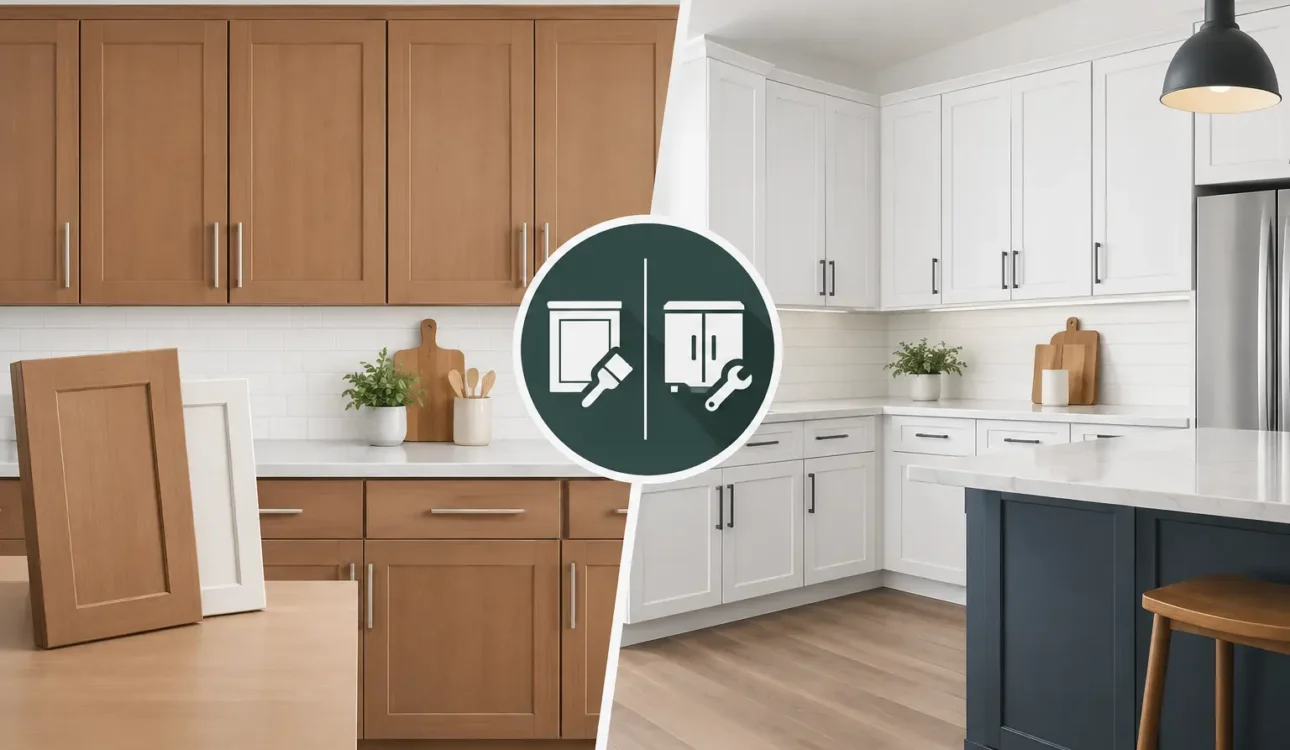
Refacing is a practical option when the cabinet boxes are solid, the layout works, and the main goal is to improve the kitchen’s appearance. The installer keeps the existing cabinet structure, then replaces the parts you see and touch every day.
New doors and drawer fronts can dramatically change the character of the room. You may move from raised-panel oak doors to a clean shaker profile, choose a painted finish, add soft-close hinges, replace worn drawer hardware, and update handles or pulls. Crown molding, valances, end panels, and toe kicks can help the cabinetry look more finished.
The savings come from avoiding demolition and retaining functional cabinet boxes. There is usually less disruption, fewer construction days, and less waste. For a homeowner who likes the kitchen’s footprint and has cabinets that were built well, refacing can provide a meaningful visual upgrade without the cost of rebuilding the room.
There are limits. Refacing does not make shallow cabinets deeper, create room for a larger pantry, correct an awkward corner cabinet, or add storage where none exists. It also cannot address structural damage inside the boxes. If the cabinet interiors are swollen from water, shelves are sagging, or the boxes are poorly constructed, new doors will not solve the underlying issue.
When Cabinet Replacement Is Worth the Higher Cost
Replacement is the stronger investment when function needs to change. This may include moving the sink, opening the kitchen to another room, adding an island, improving traffic flow, creating a coffee station, or building storage around a new appliance plan. Once the layout changes, existing cabinets rarely fit the new design well enough to make refacing practical.
New cabinets also allow you to choose the construction and storage features that suit your home. Deep drawers for pots, pull-out waste bins, tray dividers, full-height pantry storage, drawer organizers, appliance garages, and custom solutions for difficult corners can make a daily difference. These details are especially valuable in older homes where the kitchen may have been designed around appliances and routines from another era.
Replacement can also prevent a false economy. If cabinets show signs of water damage near the sink or dishwasher, loose joints, failing drawer slides, damaged particleboard, or uneven installation, refacing may preserve components that are already near the end of their useful life. Spending more upfront on new cabinetry can be the more responsible choice when it avoids a second renovation a few years later.
A full replacement also makes it easier to coordinate the surrounding work properly. Backsplash removal, flooring transitions, countertop measurements, lighting, electrical upgrades, plumbing changes, drywall repair, and paint can be planned around the new cabinet layout rather than worked around old limitations.
The Cost Factors Homeowners Often Miss
Cabinet pricing is not only about the cabinets. The final investment depends on what has to happen before, during, and after installation. A clear estimate should explain these items rather than hiding them in broad allowances.
The most common cost drivers include kitchen size, cabinet material and door style, the number of drawers, custom storage accessories, countertop selection, demolition requirements, and finishing work. If you are replacing cabinets, moving plumbing or electrical can add substantially to the project, especially in older properties where existing conditions need correction.
Countertops are a frequent source of confusion. A homeowner may receive a low cabinet quote, then discover that quartz, templating, fabrication, installation, sink cutouts, and backsplash work are additional costs. The same is true for appliances. Choosing a larger refrigerator, a wall oven, or a cooktop can affect cabinet dimensions, electrical requirements, ventilation, and surrounding trim.
Flooring deserves attention as well. If existing flooring runs only up to the old cabinet footprint, replacing cabinets may reveal unfinished areas. In some cases, the right approach is to install new flooring before new cabinets. In others, the project can be staged around the existing floor. The right choice depends on the material, condition, and planned layout.
How to Decide Between Refacing and Replacement
Start with an honest assessment of the cabinet boxes. Open every door and drawer. Look beneath the sink, around the dishwasher, and at the cabinet bottoms near exterior walls. Check for moisture damage, loose hardware, peeling surfaces, uneven shelves, and doors that no longer align. If the boxes are sound and the configuration meets your needs, refacing deserves serious consideration.
Next, think beyond appearance. Ask whether the kitchen supports how your household actually cooks, stores food, entertains, and moves through the space. If the answer is no, replacement may be the better path even if the old cabinets are structurally acceptable. A beautiful kitchen that remains difficult to use is not a successful renovation.
It also helps to consider the age of the home and your long-term plans. If you expect to stay for many years, custom or semi-custom replacement cabinets may provide better value through durability and daily function. If the kitchen has a workable layout and you want a polished update before selling or before tackling a larger renovation later, refacing can be a sensible budget-conscious choice.
Compare Scope, Not Just the Bottom-Line Price
The most useful quote comparison puts each contractor’s scope side by side. Confirm whether the price includes removal and disposal of old materials, door and drawer hardware, cabinet finishing, moldings, countertop coordination, plumbing disconnect and reconnect, electrical work, permits when required, drywall repairs, painting, and final cleanup.
Also ask who is responsible for measuring, ordering, scheduling trades, protecting adjacent rooms, and resolving issues discovered after demolition. A kitchen project involves more than cabinetry. When several providers handle separate pieces of the work, gaps in responsibility can lead to delays, added costs, and finger-pointing.
Ultimate Kitchen & Home Renovation approaches this decision as part of the complete kitchen plan, reviewing the existing cabinetry, desired layout, materials, and connected construction work before recommending a direction. That process gives homeowners a clearer budget and one accountable team from design through completion.
A Better Investment Starts With the Right Diagnosis
Refacing is not a lesser choice when the cabinet boxes are durable and the layout already works. Replacement is not overspending when better storage, a new layout, or lasting construction will change the way you live in the kitchen. The best result comes from matching the scope to the condition of the home and the goals of the people using it.
Before committing, arrange a detailed consultation, inspect the cabinetry closely, and request a written scope that explains what is included and what could affect the budget. A clear plan at the start gives you the confidence to choose an update that looks right, works hard, and feels worth the investment every day.