
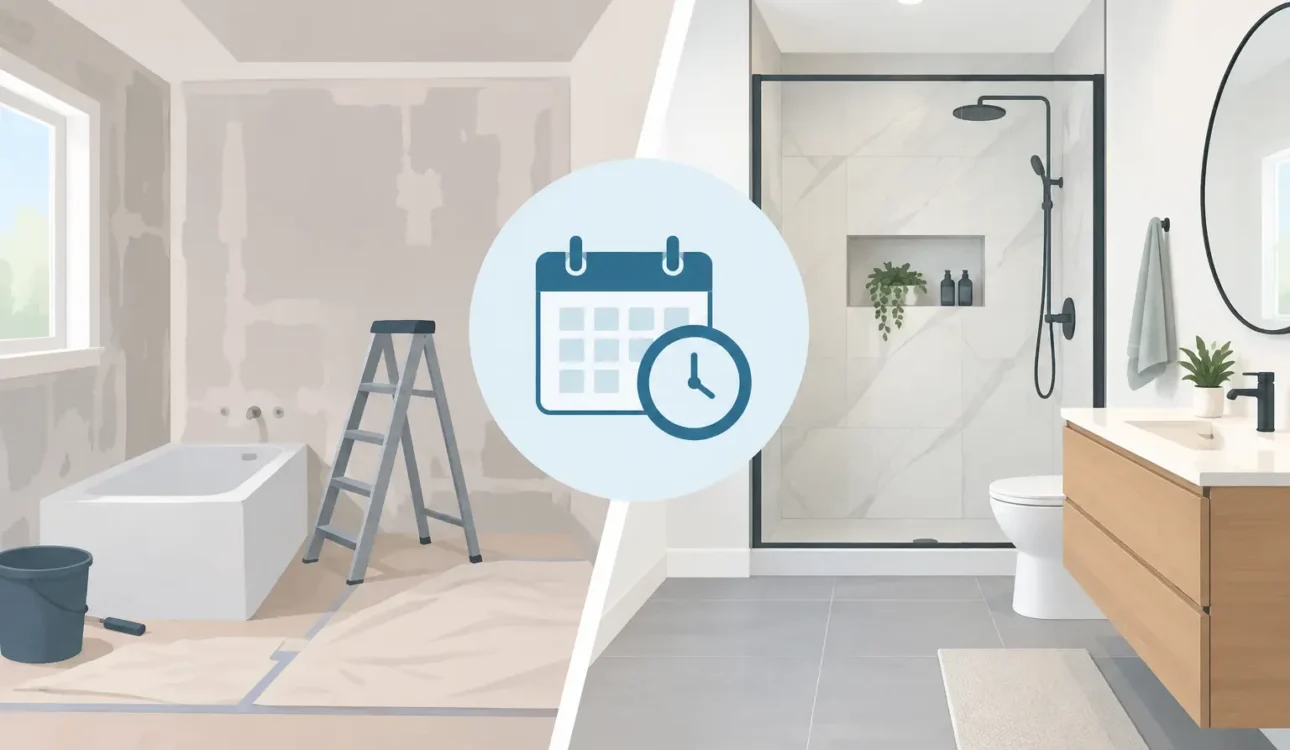
A bathroom can look like a small project until the walls come open. Behind a vanity and shower surround are plumbing lines, electrical connections, ventilation, waterproofing, and finishes that must be installed in the right order. That is why homeowners asking how long does bathroom renovation take need more than a single number. They need a realistic schedule based on the scope of work, the home’s condition, and how well the project is planned before demolition begins.
For a typical full bathroom renovation, most homeowners should plan for three to six weeks of on-site construction after materials are ready and permits, if required, are in place. A straightforward cosmetic refresh may take one to two weeks. A larger bathroom with layout changes, custom cabinetry, structural work, or permit requirements can take six to eight weeks or longer.
The goal is not to promise an unrealistically fast finish. It is to set a clear plan, coordinate every trade, and keep decisions and materials from becoming avoidable delays.
How Long Does a Bathroom Renovation Take From Start to Finish?
The construction period is only one part of the overall timeline. From the first consultation to the final walkthrough, a well-managed bathroom renovation commonly takes six to 12 weeks. Custom work, specialty tile, permit reviews, and major changes to an older home can extend that range.
Planning happens before a contractor starts removing fixtures. This stage includes measuring the room, discussing how the bathroom needs to function, preparing the design, selecting tile and fixtures, confirming a budget, and ordering materials. For homeowners in Oakville, Mississauga, and Burlington, permit timing can also affect the overall schedule when plumbing, electrical, or layout changes require formal approval.
A detailed pre-construction phase often feels slower than homeowners expect. In practice, it protects the schedule. Choosing a vanity, faucet, tile, lighting, and shower system after demolition has started leaves too many decisions open when trades are ready to work.
A Realistic Week-by-Week Bathroom Renovation Timeline
Every project has its own sequence, but a full renovation generally follows this order.
Week 1: Protection, demolition, and rough assessment
The work area is protected, and demolition begins. The crew removes old fixtures, cabinetry, flooring, wall finishes, and, when needed, sections of drywall or subfloor. Once the existing bathroom is opened, the team can confirm the condition of framing, plumbing, electrical, and ventilation.
This is also when hidden issues may appear. Water damage around a tub, an improperly vented fan, outdated wiring, or an uneven floor can change the scope. A responsible contractor explains the issue, presents the solution and cost impact, and adjusts the plan before covering the work back up.
Week 2: Framing, plumbing, electrical, and ventilation
If the layout is changing, framing modifications happen first. Licensed trades then complete rough plumbing and electrical work. This may include moving a shower valve, relocating drains, adding receptacles, installing new lighting, or upgrading the exhaust fan.
Rough-in work must be complete before walls are closed. Where permits apply, inspections are scheduled at this point. Inspection availability is outside any contractor’s direct control, but organized drawings, correct work, and early scheduling help prevent unnecessary hold-ups.
Week 3: Walls, waterproofing, and tile preparation
After rough work is approved, the bathroom begins to take shape again. Drywall or cement board is installed, shower areas are waterproofed, and surfaces are prepared for tile. Waterproofing is not the place to rush. It is one of the most important parts of a lasting bathroom renovation, particularly in a walk-in shower.
Tile preparation can take longer in rooms with large-format tile, detailed patterns, niches, curbless showers, or walls that need correction. A level and properly prepared surface makes the finished tile look better and reduces the risk of future problems.
Weeks 4 and 5: Tile, flooring, cabinetry, and finishing work
Tile installation, grouting, and curing require time. The exact duration depends on the size of the shower, floor pattern, tile material, and number of cuts. Natural stone, mosaics, and intricate layouts require more labor than a simple ceramic tile installation.
Once tile work is sufficiently cured, the vanity, countertop, mirror, lighting, toilet, faucets, shower glass, and accessories are installed. Custom vanities must be measured, manufactured, and delivered before this stage. This is why custom cabinetry is typically planned well before demolition, not ordered midway through the project.
Final days: Testing, touch-ups, and walkthrough
The final stage includes testing plumbing fixtures, checking electrical devices, completing paint touch-ups, sealing where appropriate, and cleaning the room. A final walkthrough gives the homeowner an opportunity to review the completed work and confirm that the agreed details have been addressed.
A good renovation should not end the moment the last fixture is installed. It should end when the bathroom is functioning properly, the finish work is checked, and the homeowner understands how to care for the new materials.
What Can Make a Bathroom Renovation Take Longer?
Delays are not always a sign of poor management. Some are necessary responses to conditions that could not be seen until demolition. The difference is whether the contractor identifies issues quickly, communicates clearly, and provides a practical path forward.
Material availability is one of the most common timeline factors. A backordered shower door, discontinued tile, damaged vanity, or delayed countertop can hold up final installation. Ordering key materials in advance and confirming lead times before work starts is the best protection.
Older homes can also require additional work. Plumbing may not meet current requirements, electrical circuits may need updating, or framing may be unsuitable for a new shower system. These corrections add time, but skipping them can compromise safety, performance, and resale value.
Homeowner changes during construction are another frequent source of delay. Switching tile after installation begins or changing a vanity size after plumbing rough-in can affect multiple trades. There is nothing wrong with improving a design decision, but it should be treated as a schedule and budget decision, not a simple swap.
How to Keep Your Bathroom Renovation on Schedule
The fastest projects are not necessarily the best planned. A rushed waterproofing system, incomplete inspection process, or poorly coordinated tile installation can create expensive problems later. The better objective is a predictable timeline with clear milestones.
Start by making major design selections before demolition. Confirm the vanity dimensions, plumbing fixture locations, tile layout, lighting plan, and shower glass requirements. If a product has a long lead time, select it early or choose an in-stock alternative that fits the design.
It also helps to work with one accountable renovation team. When the designer, cabinetmaker, plumber, electrician, tile installer, and project manager are coordinated under one plan, there is less room for schedule gaps and conflicting instructions. Ultimate Kitchen & Home Renovation manages bathroom projects from design and material selection through construction and final walkthrough, giving homeowners one point of contact throughout the work.
Finally, keep a small contingency in both time and budget. In an older bathroom, unexpected repairs are possible even with careful planning. A realistic allowance reduces stress and lets the team correct issues properly rather than making rushed compromises.
Is It Possible to Use the Bathroom During Renovation?
For a full renovation, the answer is usually no. Water service may be shut off at times, and the toilet, sink, and shower are typically removed during demolition. Families with only one bathroom should plan for an alternate arrangement before construction begins.
A partial renovation may allow limited use, but that depends on what is being replaced. Keeping a toilet operational while a vanity is changed is different from rebuilding a shower, moving plumbing, or replacing floor tile. Your contractor should explain exactly when the room will be unavailable, so there are no surprises once work starts.
A bathroom renovation takes long enough to demand careful coordination, but it should not feel like an open-ended disruption. With complete selections, realistic scheduling, and a team that takes responsibility for every trade, the path from an outdated bathroom to a finished, dependable space becomes much easier to manage.